Industrial Adjustable Handles for Secure, Repeatable Clamping
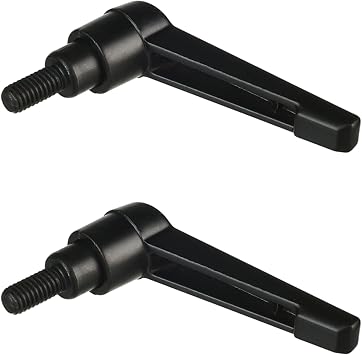
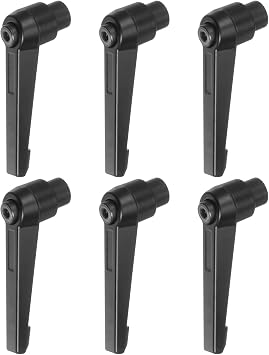
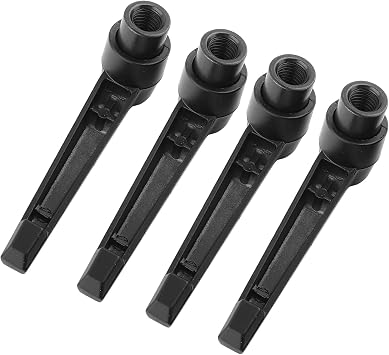
Industrial adjustable handles, also called indexing handles, clamping levers, or ratchet handles, let operators tighten, loosen, and reposition machine components by hand. They are useful when a knob or fixed lever cannot provide the required grip, leverage, or clearance. A typical handle combines a grip with a threaded stud, threaded insert, or mounting bore; a spring-loaded mechanism on ratchet styles lets the lever return to a convenient position without releasing the fastener. Common designs include fixed-grip levers, rotating handles, and adjustable levers with push-button or lift-to-disengage operation. These components appear on fixtures, guards, workstations, and equipment requiring frequent adjustment. When browsing industrial adjustable handles on Ubuy, compare the connection style and operating space alongside handle shape so the part suits its intended task.
- Manual clamping and adjustment
- Fixed and ratcheting lever styles
- Threaded or bore mounting options
Handle Types, Mechanisms, and Operating Styles
Choose a handle mechanism according to how often it will be adjusted and how much room surrounds the fastener. Fixed clamping levers turn as a single unit and suit applications with clear rotation space. Ratchet or indexing handles engage the fastener during the working stroke, then lift or disengage so the grip can reset without turning the threaded connection backward. Some models use a push-button release, while others use a pull-up action. Rotating cylindrical grips can offer a comfortable hold during repeated operation; lobed knobs and compact levers can suit lower-clearance adjustments. Handle geometry affects reach and applied leverage, but greater leverage is not automatically appropriate for every assembly. Consider the operator's grip, adjustment frequency, access angle, and nearby obstructions. Brands such as Elesa+Ganter, KIPP, JW Winco, and norelem are recognized in machine components and may offer different mechanism and grip configurations.
- Fixed levers for open rotation paths
- Indexing mechanisms for restricted clearance
- Grip shape suited to adjustment frequency
Materials, Finishes, and Environmental Suitability
Material selection influences durability, feel, and suitability for the working environment. Handles commonly use reinforced thermoplastic grips paired with steel, zinc die-cast, or stainless steel inserts and studs. Metal levers may be made from steel or stainless steel, with finishes such as black oxide, zinc plating, or polished surfaces depending on the design. Stainless steel options are often considered for equipment exposed to moisture or frequent cleaning, while coated steel components can suit general industrial assemblies. Check the product specification rather than relying on appearance: surface finish, base material, and corrosion resistance are separate characteristics. Also consider temperature, exposure to oils or cleaning agents, expected contact, and whether a textured or smooth grip is preferable. A suitable material combination helps the handle remain comfortable and functional through routine adjustments without overlooking the demands of its installation.
- Thermoplastic, steel, and stainless steel choices
- Finish should match the working environment
- Verify material and chemical compatibility
Thread, Size, and Mounting Compatibility
Compatibility begins with the fastener connection. Confirm whether the handle has a male threaded stud, a female threaded insert, or a plain bore, then match thread diameter, pitch, and usable length to the machine or fixture. Metric and inch thread systems are not interchangeable simply because their nominal sizes appear similar. For a stud-mounted handle, check engagement depth and available clearance; for a bore-mounted style, verify shaft diameter and any required keyway or retaining feature. Compare lever length and overall height with the space available for a full operating stroke, including the reset motion of an indexing handle. Application load, clamping frequency, and the strength of the mating component also matter. Product drawings and dimensional tables can help distinguish similar-looking models. Before ordering, confirm the handle's interface against the equipment specification or the existing component.
- Match thread diameter, pitch, and length
- Check bore dimensions and retaining features
- Allow clearance for the complete lever stroke
Applications, Installation, and Routine Care
Adjustable handles are used on machine guards, positioning fixtures, jigs, workholding assemblies, inspection stations, and adjustable brackets. They can make repeat setup changes easier where a hand-operated clamp is preferable to a tool-driven fastener. During installation, align the handle so its lever can move freely and the grip is accessible without contacting adjacent parts. Tighten the connection according to the equipment or component guidance; avoid using the lever as a hammer or applying excessive force that could damage threads or the mating assembly. Periodically inspect the grip, pivot, spring action, and threaded connection for looseness, wear, contamination, or damage. Clean using methods compatible with the selected material and finish, and replace a handle if its mechanism no longer indexes or holds securely. Ubuy can help shoppers discover industrial handle products from international product ranges; check the listing details for dimensions and construction before selecting a replacement.
- Used on fixtures, guards, and adjustable assemblies
- Install with unobstructed lever movement
- Inspect threads and indexing action periodically
Select the Right industrial adjustable handles
Narrow your options by starting with the task: identify what the handle clamps or positions, how frequently it moves, and whether a full rotation is possible. Next, choose a fixed or indexing mechanism, then match the grip style and lever length to operator access and available clearance. Verify thread form, diameter, pitch, stud length, bore size, and any dimensional tolerances against the equipment. Review the materials and finish in relation to moisture, cleaning practices, oils, and expected wear. For replacements, compare the mounting interface and dimensions rather than relying on the old handle's general appearance. For new designs, allow room for both tightening and reset movement, and consider whether a rotating grip or release button supports the work pattern. Ubuy offers a place to explore international industrial products; compare specifications carefully to make a confident, application-focused choice.
- Start with mechanism and application
- Verify every mounting dimension
- Match material and clearance to operating conditions